Digital vs Analog Hearing Aids: Which Should You Buy in Nigeria?
March 12, 2026 2026-09-12 4:38Digital vs Analog Hearing Aids: Which Should You Buy in Nigeria?
 Phantom Medicals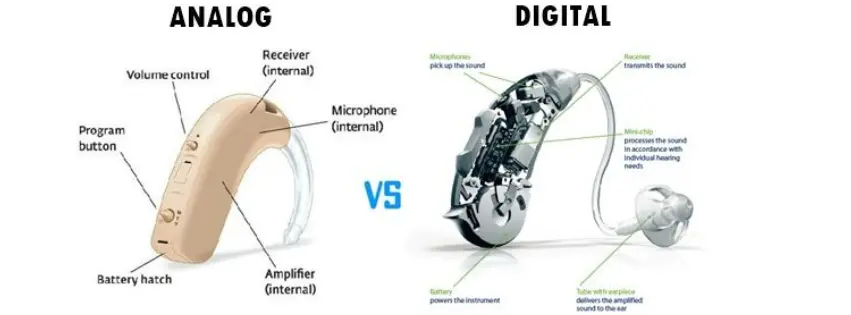
Digital vs Analog Hearing Aids: Which Should You Buy in Nigeria?
Last Updated: February 2026 | Reading Time: 10 minutes | Part of our Complete Hearing Aid Buying Guide for Nigeria
Introduction: The ₦20,000 Question
You’re shopping for a hearing aid in Lagos. The seller shows you two options: a ₦28,000 analog model and a ₦55,000 digital model. Both look similar. Both claim to help your hearing. The price difference is significant — almost double.
The seller says “digital is better” but can’t explain why in a way that makes sense. You don’t want to waste ₦27,000 on features you don’t need. But you also don’t want to buy the cheaper option only to discover it doesn’t work in Lagos traffic noise or at family gatherings.
This is the most common confusion we encounter at Phantom Medical Supplies: what’s actually different between digital and analog hearing aids, and does that difference justify the price gap in real Nigerian use?
This guide cuts through the marketing jargon. We’ll explain the actual technical differences in plain language, show you what each technology delivers in Nigerian environments, break down when the extra cost for digital is worth it (and when it’s not), and give you a clear decision framework based on your specific hearing loss and daily life.
By the end, you’ll know exactly which technology matches your needs and budget. No more guessing. No more seller-dependent advice. Just informed decision-making.
What Is Analog Hearing Aid Technology?
Analog hearing aids use traditional electronic amplification technology that’s been around since the 1950s.
How Analog Works (Simple Explanation)
Think of analog like a basic megaphone or loudspeaker:
- Microphone picks up sound — all sound in your environment (voices, traffic, wind, everything)
- Amplifier makes it louder — increases volume across all frequencies equally or with basic adjustments
- Speaker delivers amplified sound to your ear — everything you heard before, just louder
That’s it. Continuous sound waves go in, get amplified, come out louder. No computer processing. No selective filtering. Just straightforward amplification.
What Analog Can and Cannot Do
What it CAN do:
- Amplify sound significantly (make things louder)
- Basic volume control (you adjust louder or quieter)
- Some models have tone controls (adjust high/low frequencies manually)
- Work reliably with minimal complexity
- Long battery life (simpler circuits use less power)
What it CANNOT do:
- Distinguish between speech and background noise
- Amplify conversation more than traffic noise
- Reduce feedback whistling automatically
- Adjust to different environments without you manually changing settings
- Process sound intelligently to improve clarity
When Analog Works Well
Analog hearing aids perform adequately when:
- You have mild hearing loss (not moderate or severe)
- You’re mostly in quiet environments (watching TV at home, one-on-one conversations in quiet rooms)
- Background noise isn’t a significant daily challenge for you
- Budget is genuinely tight (under ₦30,000 absolute maximum)
What Is Digital Hearing Aid Technology?
Digital hearing aids use computer chips to process sound before amplifying it. This is fundamentally different from analog amplification.
How Digital Works (Simple Explanation)
Digital hearing aids are tiny computers in your ear:
- Microphone picks up sound — all environmental sound
- Analog-to-digital converter changes sound waves into digital data — sound becomes numbers a computer can analyze
- Computer chip analyzes the digital data — identifies speech vs. noise, determines which frequencies need amplification, applies programmed settings
- Processing algorithms enhance speech, reduce noise — this is where the magic happens
- Digital-to-analog converter changes processed data back to sound waves
- Speaker delivers the enhanced sound to your ear
All of this happens in milliseconds. You don’t notice the processing delay — you just hear clearer sound.
What Digital Can Do That Analog Cannot
Smart noise reduction: The chip analyzes incoming sound, identifies background noise patterns (traffic hum, generator drone, crowd murmur), and reduces their volume while maintaining speech volume. This is transformative in Lagos traffic or at owambe parties.
Feedback cancellation: Automatically detects and eliminates whistling before you hear it. Analog devices whistle constantly if volume is too high or fit isn’t perfect.
Multiple channels: Divides sound into frequency bands (4, 6, 8, 12, or more channels) and adjusts each independently. Your hearing loss isn’t uniform across all frequencies — digital can match amplification to your specific loss pattern.
Directional microphones: Focus on sound from in front of you (the person speaking) and reduce sound from behind and sides (background noise).
Automatic environment detection: Better digital models detect when you’ve moved from a quiet room to a noisy restaurant and adjust settings automatically. No manual switching needed.
Programmable settings: Audiologists or sellers can program multiple listening programs (quiet, noise, music, outdoor) tailored to your hearing loss and preferences.
What Digital Still Cannot Fix
Digital is better than analog, but it’s not magic:
- Cannot restore normal hearing (amplifies and clarifies, but you’ll still know you’re wearing a device)
- Cannot work perfectly in extreme noise (Lagos mega-church with thousands shouting still overwhelms even premium digital)
- Cannot eliminate all background noise (reduces it significantly, doesn’t remove it completely)
- Cannot compensate for severe to profound hearing loss on its own (you may need specialized high-power devices regardless of digital processing)
Key Differences in Real Nigerian Use
Let’s compare how each performs in actual Lagos scenarios:
Scenario 1: Watching TV at Home (Quiet Environment)
Analog performance: Works fine. Amplifies dialogue clearly. Volume control sufficient. Background music and sound effects also amplified but not problematic in controlled volume environment. Result: Satisfactory.
Digital performance: Also works well. May provide slightly clearer dialogue separation from background music, but the advantage over analog is minimal in this scenario. Result: Marginally better, not transformative.
Winner: Tie. Analog is adequate here.
Scenario 2: Church Service (Moderate Noise + Reverberation)
Analog performance: Amplifies everything equally — pastor’s voice, choir, congregation murmurs, people shuffling, echo from hall acoustics. Result is louder but muddy. You hear sound but speech clarity suffers. Result: Frustrating.
Digital performance: Noise reduction suppresses congregation noise and echo. Directional microphones focus on pastor at front. Speech frequencies amplified more than low-frequency rumble. Result: Significantly clearer.
Winner: Digital, noticeably.
Scenario 3: Lagos Traffic / Market (High Background Noise)
Analog performance: Amplifies traffic roar, generator hum, car horns, vendor shouts, and human voices equally. Everything is louder. Conversation is nearly impossible to follow. You’ll turn volume down to tolerate the noise, which then makes conversation too quiet. Result: Unusable in practice.
Digital performance: Identifies and reduces steady-state noise (traffic hum, generator drone). Amplifies changing frequencies (speech) more than constant noise. Directional mics focus on person speaking directly to you. Not perfect — still challenging — but speech becomes followable. Result: Usable, though not easy.
Winner: Digital, dramatically. This is where the technology difference matters most.
Scenario 4: Family Gathering (Multiple Speakers, Moderate Noise)
Analog performance: Group conversations are chaotic. Every voice amplified equally. Children playing, adults talking over each other, kitchen sounds — all competing at equal volume. You catch fragments but miss context. Result: Exhausting.
Digital performance: Directional mics help you focus on the person you’re facing. Noise reduction dampens background chatter. Still challenging in group settings (digital doesn’t solve the “multiple speakers” problem completely), but significantly less exhausting. Result: Manageable.
Winner: Digital, substantially.
Real Talk: We’ve had customers buy analog to save ₦20,000, use it for 2 weeks in Lagos noise, get frustrated, and come back to upgrade to digital. They end up spending ₦75,000 total (₦28k analog + ₦47k digital upgrade) instead of ₦55,000 if they’d bought digital initially. Save money by buying right the first time.
Price Comparison in Nigeria (2026)
| Feature | Analog Hearing Aids | Digital Hearing Aids |
|---|---|---|
| Price Range (Nigeria) | ₦15,000 – ₦45,000 | ₦35,000 – ₦250,000 |
| Typical Entry Point | ₦28,000 – ₦35,000 | ₦45,000 – ₦60,000 |
| Sound Processing | Simple amplification | Computer chip processing |
| Noise Reduction | None | Yes (quality varies by price) |
| Feedback Control | Manual only (turn down volume) | Automatic feedback cancellation |
| Channels | 1-2 (basic frequency division) | 4–20+ (sophisticated tuning) |
| Battery Life | Longer (10–14 days typical) | Shorter (7–10 days typical) |
| Durability | Simpler electronics, fewer failure points | More complex, more can go wrong |
| Best For | Mild loss, quiet environments, tight budget | Moderate+ loss, noisy environments, active life |
| Worst For | Lagos traffic, markets, social gatherings | Limited budgets under ₦40,000 |
Budget overlap zone: ₦35,000–₦45,000 is where you can find either high-end analog OR entry-level digital. In this price range, choose digital. The entry-level digital processing beats the best analog amplification for Nigerian noise environments.
When Analog Is Actually Fine (Don’t Overspend)
Digital is better in most cases, but analog isn’t always wrong. Choose analog if ALL of these apply to you:
Criteria for Analog Being Adequate
- Very mild hearing loss only — You miss some words occasionally but can follow most conversations in normal conditions
- Home-based lifestyle — You spend 80%+ of time indoors in relatively quiet environments (watching TV, reading, quiet family conversations)
- Limited exposure to noise — You don’t regularly navigate Lagos traffic, don’t attend crowded events, don’t work in noisy environments
- Budget genuinely constrained to under ₦30,000 — Not “prefer to save money” but “literally cannot afford ₦45,000+”
- Manual adjustments acceptable — You’re comfortable turning volume up/down as environments change
Example of good analog candidate: Retired grandmother who stays home most days, watches TV, receives family visitors in quiet compound, occasionally attends church but sits in front row, budget is ₦25,000 maximum. For her, analog works adequately.
Where to Find Honest Analog
If you’ve determined analog fits your needs, avoid the ₦12,000–₦18,000 ultra-cheap junk. Look in the ₦25,000–₦35,000 range from reputable sellers. Quality analog at this price point is reliable and functional within its limitations.
See our Lagos buying guide for verified sellers and our price guide for specific model recommendations.
When Digital Is Worth the Extra Cost (Most Cases)
Choose digital if ANY of these apply to you:
Strong Indicators for Digital
- Moderate or greater hearing loss — Difficulty following conversations even in quiet rooms
- Active social life — Church, family gatherings, social clubs, professional meetings
- Lagos noise exposure — Daily commute in traffic, work in markets, live near busy roads
- Group conversation needs — Family meals, work meetings, fellowship after church
- Budget allows ₦45,000+ — Not necessarily premium, but entry digital at minimum
- Previous analog failure — You tried analog and it didn’t work in your daily reality
- Employment/income considerations — Your job requires clear communication (meetings, phone calls, client interaction)
Example of digital necessity: 58-year-old businessman with moderate hearing loss, attends weekly Rotary meetings, drives daily through Lagos traffic, participates in church choir, has ₦70,000 budget. Digital is non-negotiable for his lifestyle.
Digital Entry Point: What ₦45,000–₦60,000 Gets You
Entry-level digital in this range typically offers:
- 4–6 channel processing (adequate for most users)
- Basic noise reduction (not sophisticated, but functional)
- Feedback cancellation (prevents whistling)
- 1–2 program settings (quiet mode + noise mode)
- Significant improvement over analog in noisy environments
This isn’t premium digital, but it handles Lagos conditions far better than any analog at any price.
Decision Framework: Which Should You Buy?
Answer these questions in order to determine your choice:
Question 1: What’s Your Hearing Loss Severity?
- Mild (you miss some words, TV slightly too loud): Either could work → Continue to Q2
- Moderate (regular difficulty in quiet rooms, family complains): Digital strongly recommended → Skip to Q4 for budget check
- Severe (can barely hear without significant amplification): Digital required, likely mid-range+ → See our choosing guide
Question 2: What’s Your Daily Noise Exposure?
- Low (mostly home, quiet environments): Analog could work → Continue to Q3
- Moderate (occasional traffic, some social events): Digital recommended → Skip to Q4
- High (daily Lagos commute, active social/work life): Digital required → Skip to Q4
Question 3: Are You Primarily Home-Based?
- Yes (80%+ time at home, quiet lifestyle): Analog acceptable if budget under ₦30k
- No (active outside home regularly): Digital worth the investment
Question 4: What’s Your Realistic Budget?
- Under ₦30,000: Analog is your practical option. Or save another 1-2 months to reach ₦45,000 for entry digital (genuinely worth the wait in most cases)
- ₦35,000–₦45,000: Stretch to ₦45,000+ for entry digital if at all possible. The performance gap justifies ₦8,000–₦10,000 extra.
- ₦45,000–₦90,000: Digital is clearly affordable. Choose based on features needed (4-channel entry vs. 8-channel mid-range)
- ₦90,000+: Premium digital options open up. See our price guide for specific recommendations
Your Decision Should Look Like This
“I have mild-moderate hearing loss (tested at clinic). I attend church weekly, go to family gatherings, occasionally shop in markets. Budget is ₦50,000. Based on noise exposure and budget availability, digital at ₦45,000–₦55,000 range is my choice.”
Result: Entry-level digital BTE or ITE with 4–6 channels and basic noise reduction. Will serve you well for 3+ years.
Pro Tip: If you’re genuinely torn between a ₦35,000 analog and a ₦50,000 digital, choose the digital. The regret rate for analog in Lagos noise is about 40% in our experience. The regret rate for entry digital is under 10%. The ₦15,000 difference prevents months of frustration and potential need to buy again.
Common Misconceptions About Digital vs Analog
Myth 1: “Analog Is Old Technology, Therefore Bad”
Reality: Analog is old, yes, but not inherently bad. For very specific use cases (mild loss, quiet environments only, budget under ₦30k), it’s adequate. The technology works — it’s just limited. Don’t let age alone disqualify it if it genuinely fits your narrow use case.
Myth 2: “Digital Is Always Better, So Buy the Most Expensive”
Reality: Digital is better than analog, but ₦150,000 premium digital isn’t necessarily better for you than ₦55,000 entry digital if your hearing loss is mild-moderate and your needs are standard. Don’t conflate “digital is better than analog” with “more expensive digital is always worth it.” Match to your needs.
Myth 3: “All Digital Hearing Aids Are the Same”
Reality: Huge variation in digital quality. A ₦40,000 “digital” device with 4 channels and basic processing is worlds apart from a ₦180,000 device with 16 channels, sophisticated noise reduction, and AI-powered adjustments. Both are “digital,” but performance differs dramatically. Focus on specific features (channels, noise reduction quality, feedback control), not just the “digital” label.
Myth 4: “Analog Lasts Longer Because It’s Simpler”
Reality: Partially true — analog has fewer electronic components that can fail. But in Nigeria’s humidity, both technologies fail from corrosion if not maintained properly. Device lifespan depends more on daily care (desiccant storage, cleaning) than on analog vs. digital architecture. See our maintenance guide.
Myth 5: “I Can Upgrade from Analog to Digital Later”
Reality: There’s no “upgrade path.” You’re buying a completely new device. If you buy ₦30,000 analog now and ₦55,000 digital in 6 months when you realize analog doesn’t work in Lagos traffic, you’ve spent ₦85,000 total instead of ₦55,000 if you’d bought digital initially. Plus you suffered 6 months of frustration. Buy right the first time.
Frequently Asked Questions
What is the main difference between digital and analog hearing aids?
Analog amplifies all sound equally (like a megaphone — everything gets louder). Digital uses a computer chip to analyze sound, distinguish speech from noise, and selectively amplify frequencies you need while reducing background noise. In quiet environments, the difference is minimal. In noisy Nigerian environments (traffic, markets, crowds), digital performs dramatically better.
Are digital hearing aids worth the extra money in Nigeria?
For most Nigerians, yes. If you’re ever in Lagos traffic, markets, social gatherings, or group conversations, the ₦20,000–₦30,000 extra for entry-level digital (₦45,000–₦55,000) over analog (₦25,000–₦35,000) is justified by dramatically better performance in noise. Exception: if you’re genuinely home-based 80%+ of time in quiet environments with very mild loss and budget truly can’t stretch to ₦45,000, analog works adequately.
Which is better for seniors, digital or analog?
Digital, in most cases. Seniors often struggle more in noisy environments due to age-related hearing loss patterns. Digital’s noise reduction and feedback cancellation help significantly. However, consider the senior’s actual lifestyle: a homebound grandmother with mild loss may be fine with analog, while an active grandfather attending church and family events needs digital. See our senior-specific guide for detailed recommendations.
Do digital hearing aids last longer than analog?
Not necessarily. Lifespan depends primarily on maintenance quality (daily cleaning, desiccant storage) rather than technology type. In Nigeria’s climate, both analog and digital last 3–5 years with proper care, 6–18 months without it. Digital has more complex electronics that could fail, but analog has no inherent durability advantage if maintained properly.
Can I get good quality analog hearing aids in Nigeria?
Yes, in the ₦25,000–₦35,000 range from reputable sellers. Avoid ultra-cheap (₦12,000–₦18,000) models — quality is poor. At ₦28,000–₦35,000, you can find functional analog devices that work within their limitations (quiet environments, mild loss only). But at ₦35,000+, you’re better off stretching to ₦45,000 for entry digital rather than buying top-tier analog.
Why are some digital hearing aids so expensive (₦150,000+)?
Premium pricing reflects: (1) More channels (12–20 vs. 4–6), (2) Sophisticated noise reduction algorithms, (3) Bluetooth connectivity, (4) Rechargeable batteries, (5) Premium brand names (Phonak, Siemens), (6) Professional fitting/programming services included. For mild-moderate loss in standard Nigerian use, ₦150,000+ is usually overkill. The ₦45,000–₦90,000 range serves most buyers well.
What happens if I buy digital but find it too complicated?
Entry-level digital (₦45,000–₦60,000) is barely more complex than analog — simple on/off, volume control, maybe one program switch. It’s not smartphone-level complexity. If you can operate a radio, you can use entry digital. Premium digital (₦100,000+) with multiple programs and Bluetooth can be complex — but you’re choosing to buy that level. Start simple if concerned about complexity.
Should I buy digital hearing aids online or in-store?
In-store strongly recommended, especially for first hearing aid purchase. Digital devices often need minor programming adjustments for optimal performance — easier when you have face-to-face support. Online buying saves ₦5,000–₦10,000 but you lose testing and troubleshooting access. For digital specifically, professional guidance makes a bigger difference than for simple analog. See our Lagos store guide.
Conclusion: Make Your Choice Confidently
You now understand the real differences between digital and analog hearing aids, not just the marketing claims.
Summary of key points:
- Analog = simple amplification (makes everything louder equally)
- Digital = smart processing (amplifies speech more than noise)
- In quiet environments: minimal difference
- In noisy Nigerian environments: digital dramatically better
- Budget under ₦30,000 + quiet lifestyle only = analog acceptable
- Any noise exposure + budget ₦45,000+ = digital worth it
- Entry digital (₦45,000–₦60,000) beats premium analog (₦35,000+)
Your next step:
- Use the decision framework above to determine analog or digital for your situation
- Set your budget realistically (include batteries and maintenance — see our price guide)
- Read our complete choosing guide to narrow down specific models
- Visit stores for testing (see our Lagos buying guide)
- Make your purchase and commit to the 2-week adjustment period
If you’re still unsure after reading this, call 08132719143 and describe your hearing loss, daily environments, and budget. We’ll recommend analog or digital honestly based on your actual needs — not what earns us higher margin.
Stop overthinking. Choose the technology that matches your life. Buy confidently. Hear better.
Related Articles
- Complete Guide to Buying Hearing Aids in Nigeria (2026)
- How to Choose the Right Hearing Aid for Your Needs
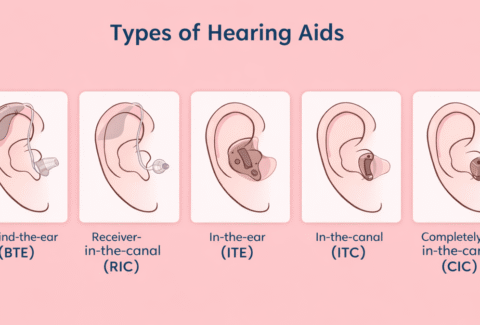
- Types of Hearing Aids Explained: BTE, ITE & CIC
- Hearing Aid Prices in Nigeria 2026: Complete Cost Breakdown
- Best Hearing Aids for Seniors in Nigeria
- Where to Buy Hearing Aids in Lagos
- Signs of Hearing Loss: 15 Early Warnings
- How to Clean Hearing Aids: Complete Nigeria Care Guide
Author: Phantom Medical Supplies team, Lagos. Based on 3 years helping customers navigate analog vs. digital decision and observing which choices lead to satisfaction vs. returns/upgrades. Technical information accurate as of February 2026. For personalized technology recommendations, call 08132719143 or visit phantommedicalsupplies.store.
Technology Disclaimer: This comparison reflects general technology differences. Specific device performance varies by brand, model, and price point. Always test devices in person when possible before purchasing.